Halloween Decorating, and the 'Bits' Behind It
Around 2010 I started getting into Halloween decorating as a hobby, and this is the result. We probably get at least 200 kids (big and small) through the neighborhood on the big night. I’ve had some kids tell me this is their favorite house, and they make a point to come by every year.
Unlike a season like Christmas, this isn’t spread out over weeks — it’s a single-night event. Setup starts the weekend before, the display goes live on the 31st, and everything comes down the next day.
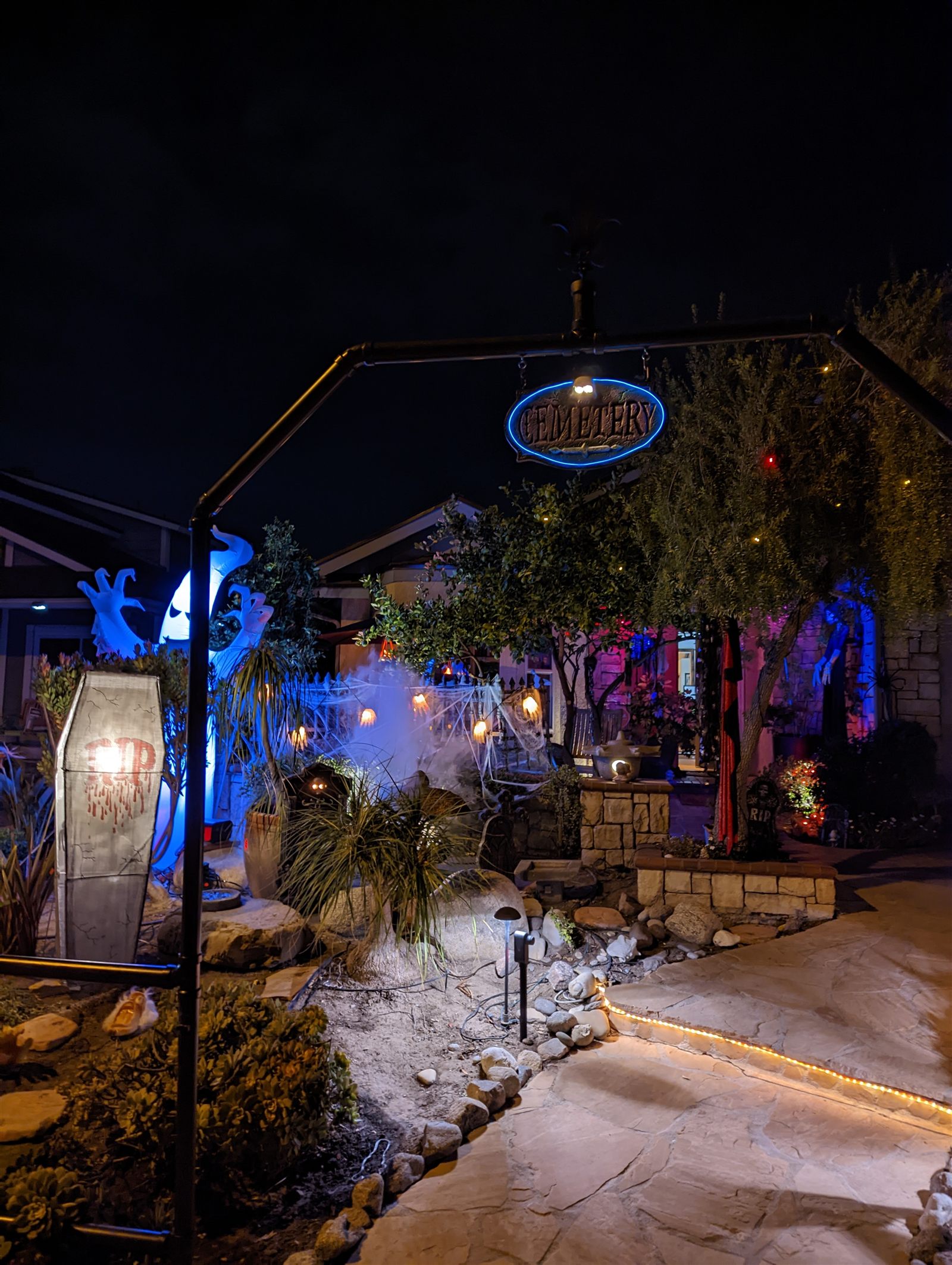
The bits
I call each individual piece of the display a “bit” — a fog effect, a talking skull, a motion-triggered scare, a lit prop. There are somewhere around a dozen of them spread around the yard in a given year, some running for over a decade now, others rebuilt or replaced along the way. A few of the more involved ones — the animatronic skull, the beam-triggered scares, the fence lighting — are complex enough to deserve their own posts, which I’ll get to over time.
The master controller
Tying it all together is a PC running Linux Mint, with a mix of custom and open-source software coordinating the whole display. Alongside that PC, 10-12 microcontrollers are spread through the yard, each handling one or more bits locally and taking direction from (or reporting back to) the central controller.
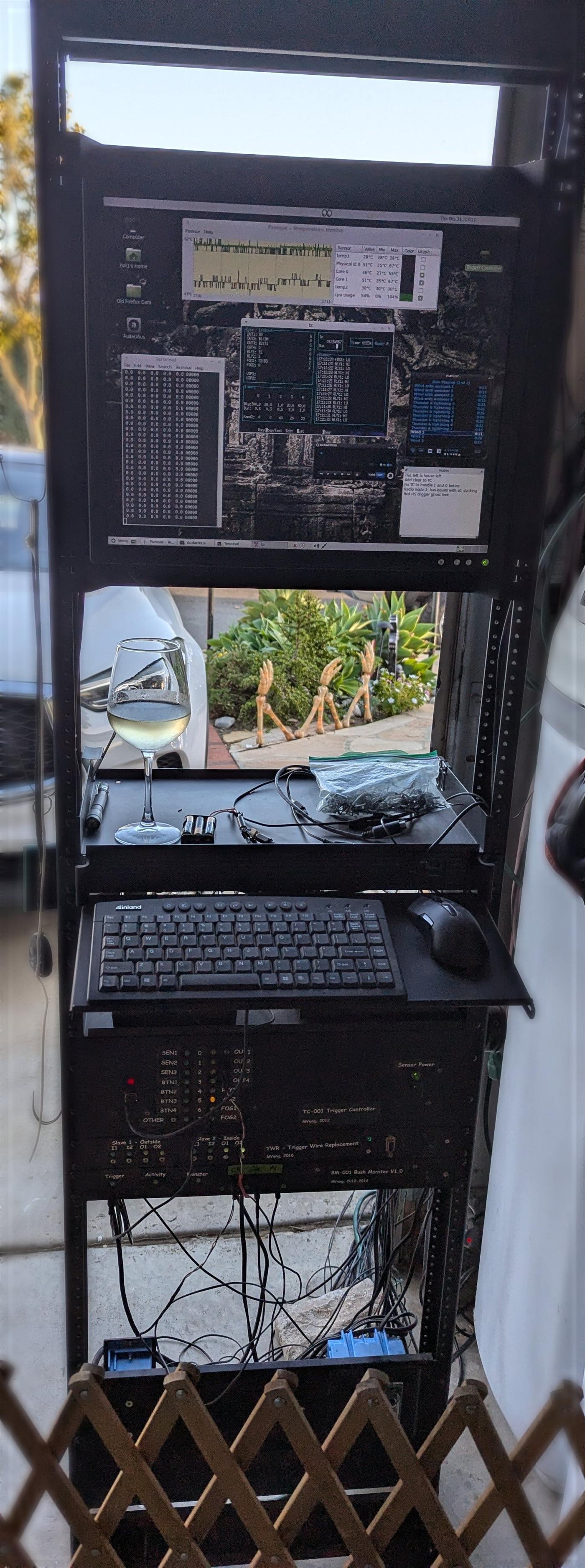
I’ll cover this rack in more detail in a future post — what’s actually running on it, and how the custom trigger controller boards talk to the bits out in the yard.
See it in action
A short video of most of the bits running on the night: watch here.
This is meant as an introduction — future posts will go deeper on individual bits, starting with the master controller itself.